
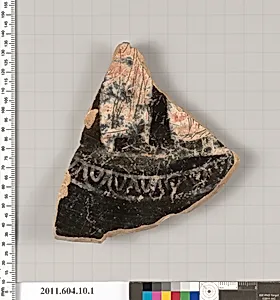
Terracotta fragment of a kylix (drinking cup)
Unknown Artist
late 5th/early 4th century BCE
Medium
Terracotta
Classification
Vases
Culture & Period
Etruscan · Classical
Department
Greek and Roman Art
Museum
Metropolitan Museum of Art, New York, NY
Credit
Gift of Dietrich von Bothmer, Distinguished Research Curator, Greek and Roman Art, 2011
Accession Number
2011.604.10.1
Rights
Public Domain
Art Historical Context
This terracotta fragment from a kylix, or shallow drinking cup, hails from Etruscan culture in the late 5th to early 4th century, during the Classical period The Etruscans, an ancient Italic civilization flourishing in central Italy before Roman dominance, were avid adopters of Greek pottery forms and techniques, blending them into their own vibrant artistic traditions. Kylikes like this one were essential for symposia—lively social gatherings centered on wine, conversation, and ritual—highlighting the cup's role in everyday elite life and communal feasting. Crafted from terracotta, the fragment exemplifies wheel-thrown pottery, often fired to a warm reddish hue and decorated with slip paints in black-figure or emerging red-figure styles influenced by Attic Greek masters. Though only a piece survives, it offers a window into Etruscan workshops, where artisans skillfully captured mythological scenes, daily motifs, or athletic figures on vase surfaces. These vessels weren't just functional; they were status symbols, traded widely across the Mediterranean, underscoring cultural exchanges that shaped Western art. Generously gifted to the Metropolitan Museum of Art in 2011 by Dietrich von Bothmer, a legendary curator of Greek and Roman antiquities, this fragment enriches our understanding of Etruscan ingenuity. Even in its incomplete state, it whispers stories of ancient revelry and artistic innovation, inviting us to imagine the full cup raised in toast millennia ago.