
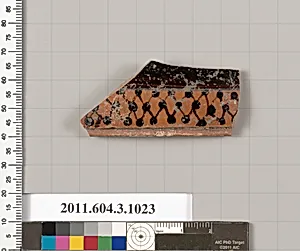
Terracotta fragment of a lekanis (covered dish)
Unknown Artist
second quarter of the 5th century BCE
Medium
Terracotta
Classification
Vases
Culture & Period
Greek, Attic · Late Archaic
Department
Greek and Roman Art
Museum
Metropolitan Museum of Art, New York, NY
Credit
Gift of Dietrich von Bothmer, Distinguished Research Curator, Greek and Roman Art, 2011
Accession Number
2011.604.3.1023
Rights
Public Domain
Art Historical Context
This delicate terracotta fragment from a *lekanis*, or covered dish, hails from Attic Greece in the second quarter of the5th century BCE, the Late Archaic period Produced in Athens, the heart of ancient Greek pottery innovation, lekanides were practical vessels used primarily by women to store cosmetics, jewelry, or ointments. Though only a fragment survives—likely from the lid or body—it offers a tantalizing glimpse into everyday life in a bustling classical household, bridging the ornate Archaic style and the emerging Classical restraint. Attic terracotta vases like this one showcase masterful wheel-throwing techniques and slip-painting traditions, evolving from black-figure to the revolutionary red-figure method by the 5th century BCE. This allowed artists greater detail in depicting figures, drapery, and motifs drawn from mythology or domestic scenes. As a product of anonymous workshop potters, it exemplifies the anonymous yet highly skilled craftsmanship that made Attic wares prized across the Mediterranean. Generously gifted to the Metropolitan Museum of Art in 2011 by Dietrich von Bothmer, this piece enriches our understanding of Greek material culture. Though incomplete, its survival speaks to the enduring legacy of Athenian artistry, inviting us to imagine the hands that once lifted its lid in an ancient Athenian home.