
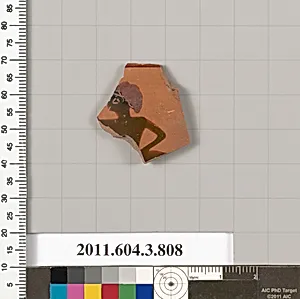
Terracotta fragment of a lekythos (oil flask)
Unknown Artist
third quarter of the sixth century BCE
Medium
Terracotta
Classification
Vases
Culture & Period
Greek, Attic · Archaic
Department
Greek and Roman Art
Museum
Metropolitan Museum of Art, New York, NY
Credit
Gift of Dietrich von Bothmer, Distinguished Research Curator, Greek and Roman Art, 2011
Accession Number
2011.604.3.808
Rights
Public Domain
Art Historical Context
This terracotta fragment from a lekythos, an ancient Greek oil flask dates to the third quarter the sixth century BCE, the vibrant Archaic period of Attic production. Lekythoi were slender vessels used to hold perfumed oils for daily rituals or as grave offerings, often decorated with poignant scenes of mourning, mythology, or daily life. Crafted in Athens, the heart of early Greek ceramics, this piece exemplifies the technical mastery of Attic workshops, where potters shaped fine clay and fired it to a warm reddish hue. Though only a fragment survives, it reflects the black-figure technique dominant in Archaic vase-painting—incised details filled with glossy black slip, creating stark contrasts against the orange clay. This method allowed artists to depict dynamic figures with remarkable precision, influencing later red-figure innovations. Attic lekythoi like this one hold immense cultural value, offering glimpses into Archaic Greek society, from religious practices to artistic storytelling. Generously gifted to the Metropolitan Museum of Art in 2011 by Dietrich von Bothmer, a pioneering curator of Greek and Roman art, this fragment invites us to ponder the fragility of antiquity while celebrating the enduring legacy of Athenian craftsmanship.