
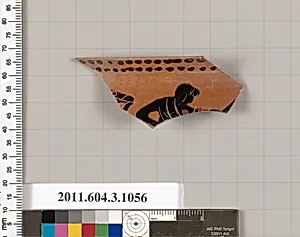
Terracotta fragment of a mastoid (drinking cup with narrow base)
Unknown Artist
late 6th/early 5th century BCE
Medium
Terracotta
Classification
Vases
Culture & Period
Greek, Attic · Archaic
Department
Greek and Roman Art
Museum
Metropolitan Museum of Art, New York, NY
Credit
Gift of Dietrich von Bothmer, Distinguished Research Curator, Greek and Roman Art, 2011
Accession Number
2011.604.3.1056
Rights
Public Domain
Art Historical Context
This terracotta fragment from a mastoid—a distinctive Greek drinking cup with a base designed for easy handling during symposia—offers a glimpse into everyday life in Archaic Attic Greece, around the late 6th to early 5th century. Mastoids were popular vessels for communal wine-drinking gatherings, where men reclined on couches, fostering social bonds, philosophical discussions, and poetic recitations. Though only a fragment survives, it exemplifies the utilitarian yet elegantly proportioned pottery of ancient Athens, crafted from fired clay for durability. Attic vases from this period mark the height of the Archaic era, bridging black-figure and emerging red-figure techniques, where artists incised details into slip-painted clay before firing. This piece, classified among Greek and Roman Art at The Metropolitan Museum of Art, highlights the technical prowess of anonymous potters and painters who decorated such wares with mythological scenes, athletes, or daily motifs—sadly lost here but evocative of the vibrant cultural output. Donated in 2011 by Dietrich von Bothmer, it underscores the museum's commitment to preserving these humble artifacts that reveal the sophistication of early Greek society. (198 words)