
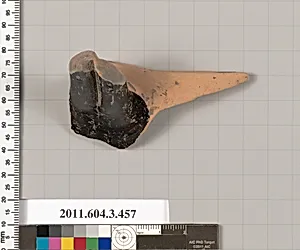
Terracotta fragment of a neck-amphora (jar)
Unknown Artist
490–480 BCE
Medium
Terracotta
Classification
Vases
Culture & Period
Greek, Attic · Late Archaic
Department
Greek and Roman Art
Museum
Metropolitan Museum of Art, New York, NY
Credit
Gift of Dietrich von Bothmer, Distinguished Research Curator, Greek and Roman Art, 2011
Accession Number
2011.604.3.457
Rights
Public Domain
Art Historical Context
This terracotta fragment from a neck-amphora, to 490–480, offers a glimpse into the vibrant world of Late Archaic Attic pottery from ancient Greece. Crafted in Athens during a pivotal transition from the Archaic to the Classical era, neck-amphorae like this were elegant storage jars used for olive oil, wine, or as grave offerings. Though only a fragment survives, it exemplifies the skilled wheel-throwing techniques of Attic potters, who fired terracotta clay to a warm reddish hue and often decorated it with intricate black- or red-figure painting. Attic vases held immense cultural importance, serving not just practical purposes but also as canvases for mythological scenes, daily life, and athletic prowess—windows into Greek society. This piece, from the Metropolitan Museum of Art's Greek and Roman Art collection, reflects the period's artistic refinement, just before the Persian Wars reshaped Greek history. Its donation by Dietrich von Bothmer, a renowned curator and expert in ancient vases, underscores its scholarly value. Though the full imagery is lost, the fragment invites us to appreciate the enduring legacy of these everyday masterpieces, bridging ancient craftsmanship with modern admiration.