
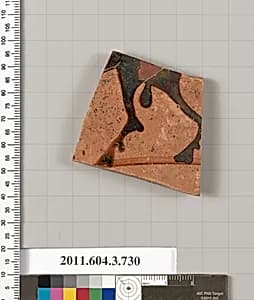
Terracotta fragment of a neck-amphora (jar)
Unknown Artist
second quarter of the sixth century BCE
Medium
Terracotta
Classification
Vases
Culture & Period
Greek, Attic · Archaic
Department
Greek and Roman Art
Museum
Metropolitan Museum of Art, New York, NY
Credit
Gift of Dietrich von Bothmer, Distinguished Research Curator, Greek and Roman Art, 2011
Accession Number
2011.604.3.730
Rights
Public Domain
Art Historical Context
This terracotta fragment from a neck-amphora, to the second quarter of the sixth century, offers a glimpse into the vibrant of Archaic Attic Greek pottery. Produced in Athens, the heart of ancient Greek ceramic innovation, neck-amphorae were practical two-handled jars used store and transport olive oil, wine, or valuables. As a fragment, it survives from a larger vessel likely adorned with the black-figure technique—where silhouetted figures in glossy black slip were incised to reveal underlying clay details—a hallmark of Attic workshops during this dynamic period. The Archaic era (c. 600–480 BCE) marked a flourishing of Greek art, with pottery serving as both everyday utility and a canvas for storytelling through myths, athletes, and daily life. Attic vases like this were exported across the Mediterranean, spreading Greek culture and iconography far and wide. Though the artist remains unknown, such pieces reflect the skilled, anonymous potters and painters who elevated terracotta into high art. Generously gifted to the Metropolitan Museum of Art in 2011 by Dietrich von Bothmer, a pioneering curator of Greek and Roman art, this fragment enriches our understanding of early Classical craftsmanship and the enduring legacy of Attic innovation.