
Terracotta fragment of a plate?
Unknown Artist
7th century BCE or later
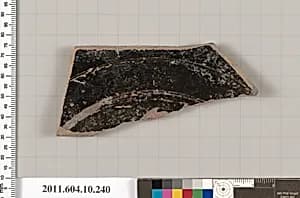
Medium
Terracotta
Classification
Vases
Culture & Period
Etruscan · Archaic/Classical
Department
Greek and Roman Art
Museum
Metropolitan Museum of Art, New York, NY
Credit
Gift of Dietrich von Bothmer, Distinguished Research Curator, Greek and Roman Art, 2011
Accession Number
2011.604.10.240
Rights
Public Domain
Art Historical Context
This delicate terracotta fragment, possibly from a plate or shallow vessel, hails from Etruscan culture during theic or Classical period, dating to the 7th century BCE later. The Etruscans, an ancient civilization flourishing in central Italy from around 900 to 100 BCE, were masterful potters influenced by Greek artistry. Their vases and tableware, like this piece classified among the Met's Greek and Roman collection, served both everyday needs and ceremonial purposes, reflecting a vibrant society of traders, warriors, and artisans. Crafted from fired clay, terracotta was prized for its durability and versatility, often wheel-thrown and decorated with incised patterns, slip, or paint—techniques that highlight Etruscan innovation in blending local traditions with imported motifs. Though incomplete, such fragments offer invaluable glimpses into domestic life, banqueting rituals, and artistic experimentation during a time when Etruria bridged Eastern Mediterranean influences and early Roman development. Generously gifted in 2011 by Dietrich von Bothmer, the Met's esteemed curator of Greek and Roman Art, this shard invites us to ponder the hands that shaped it millennia ago, connecting modern visitors to the ingenuity of an enigmatic people.