
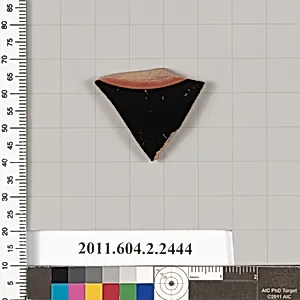
Terracotta fragment of a plate?
Unknown Artist
second quarter of the 5th century BCE
Medium
Terracotta
Classification
Vases
Culture & Period
Greek, Attic · Classical
Department
Greek and Roman Art
Museum
Metropolitan Museum of Art, New York, NY
Credit
Gift of Dietrich von Bothmer, Distinguished Research Curator, Greek and Roman Art, 2011
Accession Number
2011.604.2.2444
Rights
Public Domain
Art Historical Context
This delicate terracotta fragment, possibly from a plate, hails from Attic Greece in the second quarter of the 5 century BCE—the golden age of Classical Athens under Pericles. Produced in the renowned potters' workshops of Athens, it exemplifies the everyday artistry of ancient Greek vase-making, where terracotta vessels served both practical purposes and as canvases for storytelling. Though only a shard survives, it whispers of a vibrant world where pottery was wheel-thrown, fired in kilns, and often decorated with red-figure techniques that emerged around 530 BCE, allowing figures to stand out vividly against a glossy black background. Attic vases like this one were cultural treasures, traded across the Mediterranean and depicting myths, symposia, or heroic tales that reflected Greek values of beauty, balance, and human drama. The Classical period marked a peak in naturalism and proportion, influenced by sculptors like Phidias, with potters striving for anatomical precision and graceful compositions. This fragment, generously gifted to the Metropolitan Museum of Art in 2011 by esteemed curator Dietrich von Bothmer, invites us to ponder the lives of its anonymous makers—skilled artisans whose work bridged the mundane and the divine. Even in its broken state, it connects us to ancient rituals, from household meals to grave offerings, reminding visitors of pottery's enduring role in preserving history.