
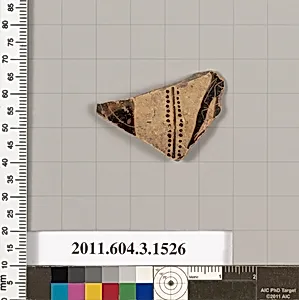
Terracotta fragment of a skyphos (deep drinking cup)
Unknown Artist
late 6th/early 5th century BCE
Medium
Terracotta
Classification
Vases
Culture & Period
Greek, Attic · Archaic
Department
Greek and Roman Art
Museum
Metropolitan Museum of Art, New York, NY
Credit
Gift of Dietrich von Bothmer, Distinguished Research Curator, Greek and Roman Art, 2011
Accession Number
2011.604.3.1526
Rights
Public Domain
Art Historical Context
This terracotta fragment from a skyphos—a deep, two-handled drinking cup—offers a glimpse into the vibrant world of Archaic Attic Greece, dating to the late 6th or early 5th century. Produced in Athens, the heart of ancient Greek pottery innovation, such vases were everyday essentials for symposia, the lively social gatherings where men reclined, drank wine, and debated philosophy or recited poetry. Though only a piece survives, it exemplifies the durability and artistry of terracotta, fired clay that allowed for intricate designs and widespread trade across the Mediterranean. Attic vases from this transitional Archaic period bridged black-figure and emerging red-figure techniques, where figures were painted in silhouette or with reserved clay backgrounds, often depicting myths, athletes, or daily life. Skyphoi like this one were practical yet elegant, their shapes optimized for communal toasting. As a testament to ancient craftsmanship, this fragment highlights how pottery preserved cultural narratives long before monumental sculpture dominated. Generously gifted to the Metropolitan Museum of Art in 2011 by Dietrich von Bothmer, a renowned curator of Greek and Roman art, it invites us to ponder the voices and rituals of a bygone era—proof that even shards can tell epic stories.