
Terracotta fragment of an amphora (jar)
Unknown Artist
520–510 BCE
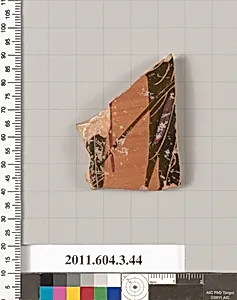
Medium
Terracotta
Classification
Vases
Culture & Period
Greek, Attic · Archaic
Department
Greek and Roman Art
Museum
Metropolitan Museum of Art, New York, NY
Credit
Gift of Dietrich von Bothmer, Distinguished Research Curator, Greek and Roman Art, 2011
Accession Number
2011.604.3.44
Rights
Public Domain
Art Historical Context
This terracotta fragment from an Attic amphora, dating to 520–510 BCE, offers a glimpse into the vibrant world of Archaic Greek pottery. Crafted in Athens during a golden age of vase painting, amphorae like this were essential storage jars for wine, oil, or grain, often used in symposia, trade, or as grave goods. As a product of Attic workshops, it exemplifies the black-figure technique—where silhouettes were painted in glossy black slip and details incised with fine tools—before the shift to the more fluid red-figure style. Though only a fragment survives, it reflects the period's artistic prowess, blending mythology, daily life, and athletic scenes to decorate everyday objects turned luxury exports. Attic vases were prized across the Mediterranean, spreading Greek culture from Italy to the Black Sea. This piece, gifted to the Metropolitan Museum of Art in 2011 by renowned curator Dietrich von Bothmer, underscores the enduring allure of these ancient vessels as windows into Archaic society. In the Greek and Roman Art department, it invites us to ponder the anonymous potter-painters whose skill elevated pottery to high art, bridging utility and storytelling in terracotta.