
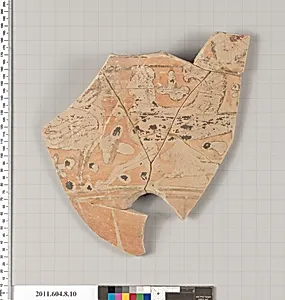
Terracotta fragment of an amphora (jar)?
Unknown Artist
6th century BCE?
Medium
Terracotta
Classification
Vases
Culture & Period
Greek, Corinthian · Corinthian
Department
Greek and Roman Art
Museum
Metropolitan Museum of Art, New York, NY
Credit
Gift of Dietrich von Bothmer, Distinguished Research Curator, Greek and Roman Art, 2011
Accession Number
2011.604.8.10
Rights
Public Domain
Art Historical Context
This terracotta fragment from an amphora, likely a storage jar for oil or wine, hails from Corinthian Greece in the 6th BCE. Produced during the Archaic period, when Corinth was a thriving hub of pottery production, such vases were everyday essentials turned into exportable art. Amphorae like this one were vital for trade across the Mediterranean, carrying goods from bustling ports to distant lands. Crafted in terracotta—a fired clay valued for its durability and affordability—Corinthian potters excelled in the black-figure technique. Figures and motifs were painted in glossy black slip, then incised to reveal the red clay beneath, creating dynamic scenes of mythology, animals, or daily life. Though only a fragment survives, it exemplifies the precision and vibrancy of this style, which influenced Athenian pottery and spread Greek culture far and wide. Generously gifted to the Metropolitan Museum of Art in 2011 by Dietrich von Bothmer, a legendary curator of Greek and Roman art, this piece invites us to ponder the anonymous hands that shaped ancient commerce and creativity. Stand close and imagine the full jar, alive with stories from antiquity!