
Terracotta fragment of an olpe (jug)?
Unknown Artist
6th/5th centuries BCE
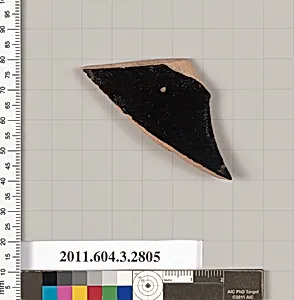
Medium
Terracotta
Classification
Vases
Culture & Period
Greek, Attic · Archaic
Department
Greek and Roman Art
Museum
Metropolitan Museum of Art, New York, NY
Credit
Gift of Dietrich von Bothmer, Distinguished Research Curator, Greek and Roman Art, 2011
Accession Number
2011.604.3.2805
Rights
Public Domain
Art Historical Context
This delicate terracotta fragment from an olpe—a slender-necked jug used for pouring wine or water—offers a glimpse into everyday life in Archaic Attic Greece, to the 6th or 5th century BCE. Crafted in the vibrant hub of Athens, such vases were wheel-thrown from fine clay, fired to a warm orange hue, and often adorned with painted scenes in the innovative black-figure or emerging red-figure techniques. Though only a piece survives, it evokes the craftsmanship of anonymous potters whose work bridged the rigid Geometric style and the dynamic Classical era. Attic pottery like this olpe held profound cultural weight, serving both practical purposes at symposia (elite drinking parties) and as export goods that spread Greek myths and motifs across the Mediterranean. The Archaic period marked a time of experimentation, with artists refining slip-painting and incision to depict gods, heroes, and athletes with increasing naturalism. This fragment, gifted to the Metropolitan Museum of Art in 2011 by renowned curator Dietrich von Bothmer, underscores the enduring allure of these humble yet masterful vessels. (198 words)