
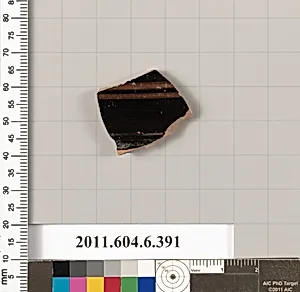
Terracotta fragment of an open shape
Unknown Artist
6th/5th centuries BCE
Medium
Terracotta
Classification
Vases
Culture & Period
Greek, Attic · Archaic
Department
Greek and Roman Art
Museum
Metropolitan Museum of Art, New York, NY
Credit
Gift of Dietrich von Bothmer, Distinguished Research Curator, Greek and Roman Art, 2011
Accession Number
2011.604.6.391
Rights
Public Domain
Art Historical Context
This terracotta fragment from an open-shaped vase offers a tantalizing glimpse into Archaic Greek pottery from Attic workshops, dating to the 6th or 5th century BCE Produced in Athens, the heart of ancient Greek ceramic innovation, such vessels were everyday essentials—likely a shallow bowl or cup used for drinking symposia wine or mixing water. Though only a fragment survives, it exemplifies the durability of terracotta, fired clay that preserved vibrant scenes of mythology, daily life, and heroic tales for millennia. Attic vases from this period mark a pivotal shift in artistic techniques, bridging black-figure painting (with incised details) and the emerging red-figure style, where figures were outlined to reveal natural clay hues. These pots were not mere utilitarian objects but cultural ambassadors, exported across the Mediterranean, influencing Etruscan and beyond. They illuminate Archaic Greece's vibrant society, from athletic prowess to divine narratives, making this piece a key artifact in understanding early classical aesthetics. Generously gifted to the Metropolitan Museum of Art in 2011 by Dietrich von Bothmer, a legendary curator of Greek and Roman art, this fragment joins a treasury of Attic masterpieces, inviting us to ponder the skilled, anonymous hands that shaped it over 2,500 years ago.