
Terracotta fragment of an undetermined shape
Unknown Artist
late 5th century/early 4th century BCE
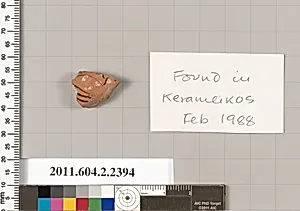
Medium
Terracotta
Classification
Vases
Culture & Period
Greek, Attic · Classical
Department
Greek and Roman Art
Museum
Metropolitan Museum of Art, New York, NY
Credit
Gift of Dietrich von Bothmer, Distinguished Research Curator, Greek and Roman Art, 2011
Accession Number
2011.604.2.2394
Rights
Public Domain
Art Historical Context
This terracotta fragment, hailing from late 5th-century or early 4th-century BCEic Greece, offers a tantalizing glimpse into the Classical period's masterful pottery tradition. Produced in Athens during a golden age of cultural and artistic innovation—amid the Peloponnesian War's aftermath and the rise of philosophy and drama—these vases were everyday marvels, often adorned with vivid scenes from mythology, daily life, or. Though its exact shape remains undetermined, it belongs to the vast corpus of Attic vases classified at the Metropolitan Museum of Art, showcasing the precision of Greek wheel-thrown ceramics. Terracotta, fired clay valued for its durability and versatility, was the medium of choice for these vessels, which served practical purposes like storage, drinking, and ritual offerings while doubling as canvases for storytelling. Artisans employed sophisticated techniques like the red-figure method, where figures emerged in the natural clay color against a glossy black background, allowing intricate details in anatomy and drapery. Even as a humble fragment, it embodies the Attic workshop's technical prowess and aesthetic refinement, bridging the heroic black-figure era with later Hellenistic exuberance. Generously gifted in 2011 by Dietrich von Bothmer, the Met's esteemed Greek and Roman art curator, this piece underscores the enduring allure of ancient fragments. They puzzle and inspire scholars, revealing lost narratives through microscopic analysis and contextual clues, inviting us to ponder the hands that shaped it millennia ago.