
Terracotta fragments of a kylix (drinking cup)
Unknown Artist
ca. 480 BCE
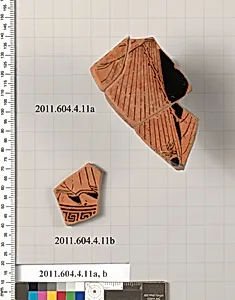
Medium
Terracotta
Classification
Vases
Culture & Period
Greek, Attic · Early Classical
Department
Greek and Roman Art
Museum
Metropolitan Museum of Art, New York, NY
Credit
Gift of Dietrich von Bothmer, Distinguished Research Curator, Greek and Roman Art, 2011
Accession Number
2011.604.4.11a, b
Rights
Public Domain
Art Historical Context
Step into the vibrant world of ancient Athens with these terracotta fragments from a kylix, a shallow drinking cup popular in symposia—lively social gatherings where elite Greeks reclined, debated philosophy, and enjoyed wine. Dating to around 480 BCE, this Attic Greek artifact hails from the Early Classical, a pivotal era bridging the rigid Archaic style and the dynamic humanism of High Classical art. Crafted in the renowned Potteries of Athens, it exemplifies the technical mastery of wheel-thrown terracotta, fired to a warm reddish hue and likely decorated in the innovative red-figure technique, where figures emerge vividly against a black-gloss background. Though incomplete, these shards offer a tantalizing glimpse into everyday luxury and cultural rituals. kylikes were essential for communal drinking, often featuring scenes of myth, athletics, or revelry that reflected Greek ideals of beauty, balance, and heroism—especially resonant after the Persian Wars, when Athens rose as a cultural powerhouse. As part of the Metropolitan Museum of Art's Greek and Roman collection, gifted by distinguished curator Dietrich von Bothmer in 2011, this piece underscores the fragility and allure of antiquity, inviting us to piece together the symposiast's toast to victory and camaraderie.