
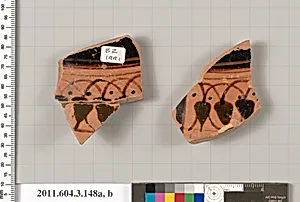
Terracotta fragments of an amphora (jar)
Unknown Artist
540–530 BCE
Medium
Terracotta
Classification
Vases
Culture & Period
Greek, Attic · Archaic
Department
Greek and Roman Art
Museum
Metropolitan Museum of Art, New York, NY
Credit
Gift of Dietrich von Bothmer, Distinguished Research Curator, Greek and Roman Art, 2011
Accession Number
2011.604.3.148a, b
Rights
Public Domain
Art Historical Context
Step into the vibrant world of Archaic Greece with these terracotta fragments from an Attic amphora, dating to 540–530 BCE. Crafted in ancient Athens, amphorae like this were everyday workhorses—tall, two-handled jars used to store and transport precious commodities such as olive oil, wine, and. Standing as testaments to the bustling trade networks of the Mediterranean, they often doubled as canvases for storytelling through intricate decorations. Though incomplete, these fragments highlight the mastery of Attic potters during the Archaic period, a time of artistic innovation just before the shift from black-figure to red-figure painting techniques. Wheel-thrown on a potter's wheel and fired in kilns, the terracotta clay achieved its warm reddish hue, ready for painted motifs that captured myths, daily life, and heroic tales. This piece reflects the cultural zenith of Attic vase-making, where form met function in exportable luxury goods that spread Greek influence far and wide. Generously gifted to the Metropolitan Museum of Art in 2011 by Dietrich von Bothmer, a legendary curator of Greek and Roman art, these shards invite us to piece together the ancient past—reminders of a society where pottery was both utility and high art.