
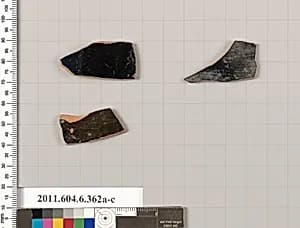
Terracotta fragments of closed shapes
Unknown Artist
6th/5th centuries BCE
Medium
Terracotta
Classification
Vases
Culture & Period
Greek, Attic · Archaic/Classical
Department
Greek and Roman Art
Museum
Metropolitan Museum of Art, New York, NY
Credit
Gift of Dietrich von Bothmer, Distinguished Research Curator, Greek and Roman Art, 2011
Accession Number
2011.604.6.362a–c
Rights
Public Domain
Art Historical Context
These terracotta fragments from closed-shape vases, dating to the 6th–5th centuries BCE, a glimpse into the vibrant world of Archaic and Classical Attic pottery from ancient Greece. Produced in Athens, the heart of Attic culture, these pieces represent everyday vessels—likely amphorae, jugs, or storage jars—crafted from fired clay. Though incomplete, they exemplify the technical mastery of Greek potters, who shaped durable forms for practical uses like storing wine, oil, or grains, while often adorning them with painted scenes of mythology, daily life, or athletic prowess. Attic vases hold immense historical significance as some of the finest surviving examples of ancient Greek art, bridging the decorative black-figure technique of the Archaic period (with silhouetted figures incised through glossy black slip) and the innovative red-figure style of the Classical era (where backgrounds were painted black to highlight natural clay figures). Exported across the Mediterranean, they fueled trade and spread Greek ideals of beauty and harmony. These fragments, gifted to the Metropolitan Museum of Art in 2011 by renowned curator Dietrich von Bothmer, allow scholars to reconstruct vessel forms and firing methods, revealing insights into workshops, trade routes, and cultural rituals. Even in their broken state, these shards whisper stories of symposia, burials, and seafaring voyages, reminding us how ordinary objects embodied extraordinary artistry.