
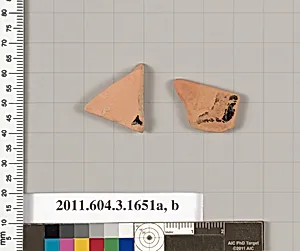
Terracotta fragments of kylikes: Band or lip cups (drinking cups)
Unknown Artist
third quarter of the 6th century BCE
Medium
Terracotta
Classification
Vases
Culture & Period
Greek, Attic · Archaic
Department
Greek and Roman Art
Museum
Metropolitan Museum of Art, New York, NY
Credit
Gift of Dietrich von Bothmer, Distinguished Research Curator, Greek and Roman Art, 2011
Accession Number
2011.604.3.1651a, b
Rights
Public Domain
Art Historical Context
These terracotta fragments from kylikes—ancient Greek drinking cups known as "band" or "lip" cups—date to the third quarter of the 6th century BCE, during Athens' vibrant Archaic period. Crafted in Attic workshops, these pieces exemplify the everyday elegance of Greek pottery, designed for symposia where men gathered to drink, discuss philosophy, and celebrate life. Though incomplete, the fragments preserve the delicate forms of these shallow, stemmed cups, ideal for sipping wine mixed with water, a staple of ancient social rituals. Attic terracotta vases like these were fired in kilns and often decorated using the innovative black-figure technique, where figures were painted in glossy black slip and incised to reveal red clay beneath. This method marked a peak in Archaic artistry, blending functionality with storytelling—likely featuring mythological scenes, athletes, or daily motifs on the broad lips or bands. Exported across the Mediterranean, such cups spread Greek culture far and wide, influencing Etruscans and beyond. A generous gift to the Metropolitan Museum of Art from Dietrich von Bothmer in 2011, these shards offer a tangible link to Archaic Athens' golden age of pottery, reminding us how fragile artifacts endure to illuminate lost worlds.