
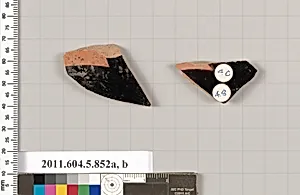
Terracotta fragments of kylikes (drinking cups)
Unknown Artist
6th/5th centuries BCE
Medium
Terracotta
Classification
Vases
Culture & Period
Greek, Attic · Archaic/Classical
Department
Greek and Roman Art
Museum
Metropolitan Museum of Art, New York, NY
Credit
Gift of Dietrich von Bothmer, Distinguished Research Curator, Greek and Roman Art, 2011
Accession Number
2011.604.5.852a, b
Rights
Public Domain
Art Historical Context
These terracotta fragments from kylikes, or shallow drinking cups, hail from Attic Greece during the Archaic and Classical (6th–5th centuries BCE). Crafted by an unknown artist, they exemplify the pinnacle of ancient Greek pottery, a medium that served both practical and artistic purposes. Kylikes were essential for symposia—ively social gatherings where elites reclined, drank wine mixed with water, and engaged in philosophy, poetry, and revelry. Attic vases like these were wheel-thrown from fine clay, fired in kilns, and often decorated using innovative black-figure or red-figure techniques, where figures were incised or reserved against a glossy black slip background. Though surviving only as fragments, these pieces offer a window into the vibrant world of classical Athens, a cultural hub whose pottery was exported across the Mediterranean, influencing art from Italy to Persia. The transition from Archaic rigidity to Classical grace is evident in such works, blending mythological narratives, daily life scenes, and athletic motifs that celebrated Greek ideals of beauty and harmony. Donated to the Metropolitan Museum of Art in 2011 by esteemed curator Dietrich von Bothmer, they remind us how everyday objects became canvases for storytelling, preserving the ingenuity of a civilization that shaped Western art.