
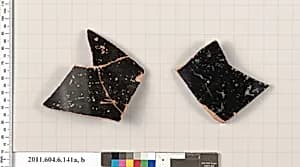
Terracotta fragments of open shapes
Unknown Artist
6th/5th centuries BCE
Medium
Terracotta
Classification
Vases
Culture & Period
Greek, Attic · Archaic/Classical
Department
Greek and Roman Art
Museum
Metropolitan Museum of Art, New York, NY
Credit
Gift of Dietrich von Bothmer, Distinguished Research Curator, Greek and Roman Art, 2011
Accession Number
2011.604.6.141a, b
Rights
Public Domain
Art Historical Context
These terracotta fragments represent remnants of open-shaped vases from Attic Greece, dating to the 6th or 5th century BCE a pivotal time bridging the Archaic and Classical periods. Produced in ancient Athens, the epicenter of Greek pottery, these pieces likely formed part of everyday or ceremonial vessels such as kylikes (drinking cups) or lekythoi (oil flasks). Open shapes were prized for their functionality in symposia—lively social gatherings where wine flowed and stories were shared—reflecting the vibrant cultural life of the period. Crafted from fired clay, Attic terracotta vases exemplify masterful wheel-throwing techniques and often featured painted decorations in black-figure or emerging red-figure styles, though these fragments preserve only the earthy medium itself. Their survival speaks to the durability of terracotta and the archaeological thrill of reconstruction, offering glimpses into a world of myth, daily ritual, and artistic innovation. As artifacts from the Archaic/Classical transition, they highlight Athens' dominance in exporting pottery across the Mediterranean, influencing trade and taste. Generously gifted to the Metropolitan Museum of Art in 2011 by Dietrich von Bothmer, a legendary curator of Greek and Roman art, these fragments enrich our understanding of ancient craftsmanship. Though incomplete, they invite visitors to ponder the hands that shaped them millennia ago.