
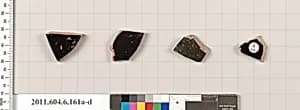
Terracotta fragments of open shapes
Unknown Artist
6th/5th centuries BCE
Medium
Terracotta
Classification
Vases
Culture & Period
Greek, Attic · Archaic/Classical
Department
Greek and Roman Art
Museum
Metropolitan Museum of Art, New York, NY
Credit
Gift of Dietrich von Bothmer, Distinguished Research Curator, Greek and Roman Art, 2011
Accession Number
2011.604.6.161a–d
Rights
Public Domain
Art Historical Context
These terracotta fragments represent open-shaped vases from ancient Attic Greece, dating the 6th or 5th centuries BCE spanning the Archaic and early Classical periods. Crafted an unknown potter or painter, they exemplify the everyday artistry of Athens' prolific ceramic workshops. Open shapes—such as shallow bowls, kylikes, or skyphoi—were versatile vessels used for drinking, mixing wine, or serving at symposia, social gatherings central to Greek life. Terracotta, fired clay abundant in Attica, allowed for intricate techniques like black-figure (incised figures on a glossy black ground) in the Archaic era or the revolutionary red-figure style of the Classical period, where figures emerged in reserved clay against a black background. Though fragmentary, these pieces offer glimpses into the standardized yet masterful production of Attic pottery, often decorated with mythological scenes, athletes, or daily motifs that reflected Greek values of beauty, symmetry, and narrative. Generously gifted to the Metropolitan Museum of Art in 2011 by Dietrich von Bothmer, a pioneering scholar of Greek and Roman art, these fragments highlight the enduring allure of Attic vases. Exported across the Mediterranean, they served as cultural ambassadors, preserving stories and styles for millennia. Visitors, imagine piecing together ancient feasts through these resilient shards!