
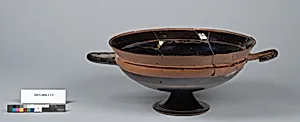
Terracotta kylix (drinking cup)
Unknown Artist
early 6th century BCE
Medium
Terracotta
Classification
Vases
Culture & Period
East Greek · Archaic
Department
Greek and Roman Art
Museum
Metropolitan Museum of Art, New York, NY
Credit
Gift of Dietrich von Bothmer, Distinguished Research Curator, Greek and Roman Art, 2011
Accession Number
2011.604.13.1
Rights
Public Domain
Art Historical Context
Step into the vibrant world of Archaic Greece with this elegant terracotta kylix, shallow drinking cup from the early6th century BCE. Crafted by an unknown East Greek artisan, this vessel hails from a period when Greek pottery was blossoming, bridging the Geometric and Classical eras. East Greek wares, often produced on islands like Rhodes or Samos, were prized for lively designs and technical finesse, though this example exemplifies the everyday elegance of sympotic life—those lively drinking parties where wine flowed and ideas sparkled. Made of fired terracotta, the kylix's broad bowl and sturdy handles made it ideal for mixing and sipping wine, a staple of ancient social rituals. Its survival speaks to the durability of this medium: clay shaped on a potter's wheel, dried, and fired in kilns to achieve a warm, reddish hue. As part of the Metropolitan Museum of Art's Greek and Roman collection, gifted in 2011 by the esteemed Dietrich von Bothmer, it offers a tangible link to East Greek culture's seafaring spirit and artistic innovation. Though decoration details are elusive, such kylikes often featured bold figures in black-figure technique, hinting at myths or daily scenes. Pause here to imagine toasting with ancient friends—this humble cup carries echoes of laughter and legacy across millennia.