
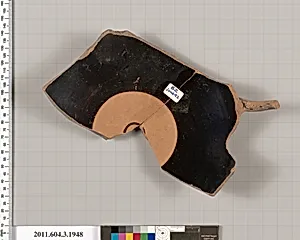
Terracotta rim fragment of a kylix: Cassel cup (drinking cup)
Unknown Artist
third quarter of the 6th century BCE
Medium
Terracotta
Classification
Vases
Culture & Period
Greek, Attic · Archaic
Department
Greek and Roman Art
Museum
Metropolitan Museum of Art, New York, NY
Credit
Gift of Dietrich von Bothmer, Distinguished Research Curator, Greek and Roman Art, 2011
Accession Number
2011.604.3.1948
Rights
Public Domain
Art Historical Context
This delicate terracotta rim fragment from kylix, or drinking cup, hails from Attic Greece in the third quarter of the6th century BCE, the vibrant Archaic period. Known as "Cassel cup," offers a glimpse into the daily rituals of ancient symposia—lively social gatherings where elites reclined, drank wine, and debated philosophy. Kylixes like this were shallow, stemmed vessels designed for easy handling, often featuring intricate painted scenes of mythology, daily life, or athletic prowess on their interiors and exteriors. Crafted in terracotta, a fired clay medium that defined Greek vase-making, this piece exemplifies Attic pottery's technical mastery. Potters and painters in Athens pioneered black-figure techniques around this time, incising details into glossy black slip before firing to reveal red clay beneath—a method that captured dynamic figures with remarkable precision. Though only a fragment survives, it connects us to golden age of artistic innovation, when Athens emerged as a cultural powerhouse exporting vases across the. Generously gifted to the Metropolitan Museum of Art in 2011 by Dietrich von Bothmer, a legendary curator of Greek and Roman art, this shard invites us to ponder the full vessel's lost splendor and the symposiasts who once raised it in toast.