
Terracotta rim fragment of a kylix (drinking cup)
Unknown Artist
460–450 BCE
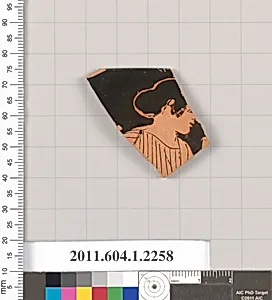
Medium
Terracotta
Classification
Vases
Culture & Period
Greek, Attic · Classical
Department
Greek and Roman Art
Museum
Metropolitan Museum of Art, New York, NY
Credit
Gift of Dietrich von Bothmer, Distinguished Research Curator, Greek and Roman Art, 2011
Accession Number
2011.604.1.2258
Rights
Public Domain
Art Historical Context
This delicate terracotta rim fragment from kylix, a shallow drinking cup popular in ancient Greece around 460–450 BCE, offers a glimpse into the refined world of Attic Classical pottery. Crafted in the heart of Athens during the city's Golden Age, kylikes were essential for symposia—ively social gatherings where elite men reclined, drank wine diluted with water, and engaged in philosophical discourse, poetry, and games. Though only a fragment survives, it hints at the vessel's graceful form, designed for easy handling while lounging. Attic vases like this one represent the pinnacle of Greek ceramic artistry, transitioning from earlier black-figure to the innovative red-figure technique that allowed for intricate details in figures and scenes. Terracotta, fired clay, was both durable and versatile, often painted with mineral-based slips for vivid reds, blacks, and whites that have endured millennia. This piece exemplifies the technical mastery and aesthetic elegance of Classical Greek potters, whose wares were exported across the Mediterranean, spreading Athenian culture. Generously donated to the Metropolitan Museum of Art in 2011 by Dietrich von Bothmer, a renowned curator of Greek and Roman art, this fragment enriches our understanding of everyday luxury in ancient Athens. Even in its partial state, it connects us to the sympotic rituals that shaped Western social traditions.