
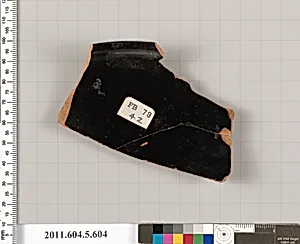
Terracotta rim fragment of a kylix (drinking cup)
Unknown Artist
6th/5th centuries BCE
Medium
Terracotta
Classification
Vases
Culture & Period
Greek, Attic · Archaic/Classical
Department
Greek and Roman Art
Museum
Metropolitan Museum of Art, New York, NY
Credit
Gift of Dietrich von Bothmer, Distinguished Research Curator, Greek and Roman Art, 2011
Accession Number
2011.604.5.604
Rights
Public Domain
Art Historical Context
This delicate terracotta rim fragment from a kylix, or shallow drinking cup, hails from Attic Greece during the Archaic and Classical periods (6th–5th centuries BCE). Crafted by an unknown potter-painter, it offers a glimpse into the vibrant world of ancient Athenian pottery workshops. Kylikes like this one were essential for symposia—lively social gatherings where elite men reclined, drank wine mixed with water, and engaged in philosophical debates, poetry, and merriment. The rim, likely part of a vessel painted in the iconic black-figure or emerging red-figure technique, would have framed scenes of mythology, daily life, or athletic prowess, though only this slender edge survives. Terracotta, fired clay abundant in Attica, allowed for wheel-thrown forms that were durable yet finely detailed. Artisans slip-decorated the surfaces with mineral-based paints, firing them in kilns to create glossy black silhouettes or reserved red grounds—a technical marvel that influenced ceramics worldwide. Donated to the Metropolitan Museum of Art in 2011 by the esteemed Dietrich von Bothmer, this fragment underscores the precision of Attic vase-making, a cornerstone of Greek art exported across the Mediterranean. Though small, such shards are treasures for scholars, revealing trade networks, workshop styles, and cultural rituals. Imagine it once held in a symposiast's hand, echoing the echoes of ancient toasts!