
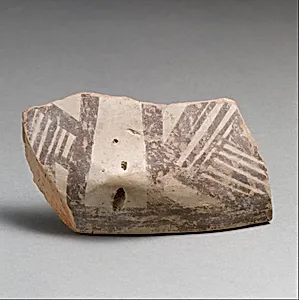
Terracotta rim fragment with lug and linear decoration
Unknown Artist
ca. 4300–3300 BCE
Medium
Terracotta
Dimensions
length 3 3/8in. (8.5cm)
Classification
Vases
Culture & Period
Dimini culture · Late Neolithic
Department
Greek and Roman Art
Museum
Metropolitan Museum of Art, New York, NY
Credit
Anonymous Gift, 1930
Accession Number
30.119.7
Rights
Public Domain
Art Historical Context
This delicate terracotta rim fragment, to around 4300–3300 BCE, offers a glimpse into the Late Neolithic Dimini culture of ancient Thessaly in Greece. Part of a larger vase, it measures just 3 3/8 inches (8.5 cm) in and features a lug—a small protruding handle or decorative element—alongside incised linear patterns. Crafted from fired clay, this handmade piece exemplifies early ceramic technology, where potters shaped vessels by coiling or pinching clay before burnishing and decorating them with simple geometric motifs using sharp tools. The linear decoration reflects the Dimini people's emerging aesthetic sensibilities, possibly symbolizing everyday patterns from their agrarian world of farming and herding communities. Such fragments highlight the transition from utilitarian to subtly ornamental pottery in prehistoric Greece, bridging the Neolithic era toward later Bronze Age innovations. Though incomplete, it reveals sophisticated firing techniques that ensured durability for storage or ritual use. Housed in the Metropolitan Museum of Art's Greek and Roman Art Department as an anonymous gift from 1930, this artifact connects us to humanity's ancient ingenuity, reminding visitors of the quiet artistry in everyday objects from 6,000 years ago.