
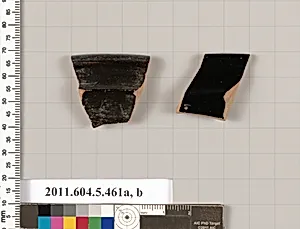
Terracotta rim fragments of kylikes (drinking cups)
Unknown Artist
6th/5th centuries BCE
Medium
Terracotta
Classification
Vases
Culture & Period
Greek, Attic · Archaic/Classical
Department
Greek and Roman Art
Museum
Metropolitan Museum of Art, New York, NY
Credit
Gift of Dietrich von Bothmer, Distinguished Research Curator, Greek and Roman Art, 2011
Accession Number
2011.604.5.461a, b
Rights
Public Domain
Art Historical Context
These terracotta rim fragments from kylikes, or drinking cups, hail from Attic Greece during the Archaic and Classical periods (6th–5th centuries BCE). Kylikes were elegant, wide-mouthed vessels designed for wine at symposia—lively social gatherings where elites reclined, debated philosophy, and enjoyed poetry. Produced in Athens, the heart of ancient Greek pottery, these fragments exemplify the craftsmanship of anonymous workshops that churned out thousands of vases for everyday use, rituals, and export across the Mediterranean. Terracotta, fired clay, was the ideal medium for these durable yet lightweight cups, often wheel-thrown and decorated with black-figure or red-figure painting techniques that captured mythological scenes, athletes, or daily life. Though only rims survive, they hint at the refined forms and glossy slips that made Attic wares prized worldwide, influencing Etruscan and other cultures. Spanning the shift from Archaic rigidity to Classical grace, such pieces offer a window into evolving Greek aesthetics and society. Generously gifted to the Metropolitan Museum of Art in 2011 by Dietrich von Bothmer, these fragments remind us how even broken shards preserve vibrant histories, piecing together the sympotic joys of antiquity.