
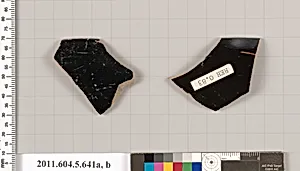
Terracotta rim fragments of kylikes (drinking cups)
Unknown Artist
6th/5th centuries BCE
Medium
Terracotta
Classification
Vases
Culture & Period
Greek, Attic · Archaic/Classical
Department
Greek and Roman Art
Museum
Metropolitan Museum of Art, New York, NY
Credit
Gift of Dietrich von Bothmer, Distinguished Research Curator, Greek and Roman Art, 2011
Accession Number
2011.604.5.641a, b
Rights
Public Domain
Art Historical Context
These delicate terracotta rim fragments fromikes, or drinking cups, offer a glimpse into the vibrant life of ancient Attic Greece during the Archaic and Classical periods (6th–5th centuries BCE). Kylikes were essential vessels in symposia—elegant drinking parties where men gathered to discuss philosophy, poetry, and politics. Crafted in Attica, the heart of classical Greek pottery production, these cups were typically wide and shallow, designed for easy handling while reclining, with interiors often painted with intricate scenes visible when raised to the lips. Though only fragments survive, they exemplify the masterful terracotta techniques of Attic workshops, where potters used wheel-throwing for precise shapes and fired clay at high temperatures for durability. The rims likely framed black-figure or early red-figure decorations—hallmarks of the era—depicting myths, athletes, or daily life, showcasing the transition from silhouetted figures to more naturalistic red-ground styles. Such vases highlight Greece's cultural emphasis on beauty in everyday objects, blending utility with artistry. Generously gifted to the Metropolitan Museum of Art in 2011 by Dietrich von Bothmer, a pioneering curator of Greek and Roman art, these pieces enrich our understanding of ancient craftsmanship and continue to captivate visitors with their timeless elegance.