
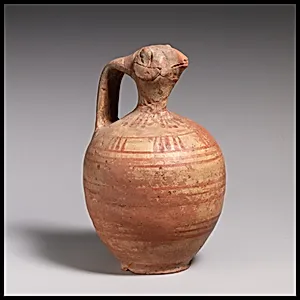
Terracotta siphon
Unknown Artist
6th century BCE
Medium
Terracotta
Dimensions
H. 6 5/8 in. (16.8 cm)
Classification
Vases
Culture & Period
Lydian · Archaic
Department
Greek and Roman Art
Museum
Metropolitan Museum of Art, New York, NY
Credit
Gift of The American Society for the Exploration of Sardis, 1914
Accession Number
14.30.21
Rights
Public Domain
Art Historical Context
This charming terracotta siphon, to the 6th century BCE, hails from the ancient Lydian culture in Anatolia (modern-day Turkey). Standing just 6 5/8 inches (16.8 cm) tall, it exemplifies the Archaic period's blend of everyday utility and skilled craftsmanship. Excavated near Sardis—the opulent capital of Lydia, famed for its wealth and King Croesus—this vessel was generously gifted to the Metropolitan Museum of Art 1914 by the Society for the Exploration ofis. Classified among Greek and Roman vases, this object is no ordinary storage jar; it's a functional siphon, a marvel of early hydraulic engineering. Lydians pioneered advanced water management systems, using such terracotta pipes to channel water over distances via siphon action, showcasing their ingenuity in urban infrastructure long before the Romans perfected aqueducts. Crafted from fired clay, it highlights terracotta's versatility as a durable, moldable medium ideal for both decorative pottery and practical plumbing. In the Met's Greek and Roman Art department, this unassuming artifact reveals the Lydians' sophisticated society—innovators in coinage, trade, and technology. It invites us to appreciate how ancient daily life intertwined art, engineering, and necessity, bridging the gap between the mundane and the monumental.