
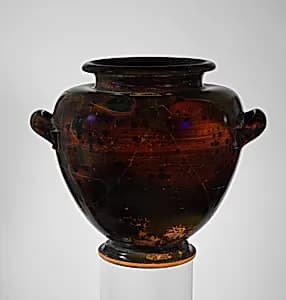
Terracotta stamnos (jar)
Unknown Artist
early 5th century BCE
Medium
Terracotta
Dimensions
Overall: 15 3/4 x 18 5/8in. (40 x 47.3cm) diameter (neck) 15 1/4in. (38.7cm)
Classification
Vases
Culture & Period
Greek, Attic · Classical
Department
Greek and Roman Art
Museum
Metropolitan Museum of Art, New York, NY
Credit
Rogers Fund, 1910
Accession Number
10.210.15
Rights
Public Domain
Art Historical Context
This elegant terracotta stamnos, crafted by an unknown Attic artist in the early 5th century BCE, exemplifies the pinnacle of Classical Greek pottery. Hailing from Athens—the heart of ancient Greek innovation—this two-handled jar stands about 15¾ inches tall and 18⅝ inches wide, with a broad neck ideal for pouring. Stamnoi like this were essential household vessels, often used to store or mix wine during symposia, the lively social gatherings where philosophy, poetry, and politics flowed freely. Terracotta, fired clay painted with mineral-based slips, allowed Attic potters to create durable yet beautifully decorated wares exported across the Mediterranean. This period marked a shift toward red-figure techniques, where figures emerged in the natural clay color against a black-gloss background, offering greater anatomical detail and narrative depth—hallmarks of Classical realism. Though specific scenes on this piece aren't detailed here, such vases typically depicted myths, daily life, or heroic tales, reflecting Greece's cultural reverence for storytelling and the gods. Acquired through the Rogers Fund in 1910, this stamnos now graces the Metropolitan Museum of Art's Greek and Roman Art department. It invites us to imagine ancient hands filling it with fragrant wine, bridging the symposium's echoes to our modern gaze—a testament to enduring Athenian artistry.