
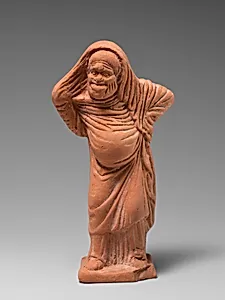
Terracotta statuette of an actor
Unknown Artist
late 5th–early 4th century BCE
Medium
Terracotta
Dimensions
H. 4 1/8 in. (10.5 cm)
Classification
Terracottas
Culture & Period
Greek, Attic · Late Classical
Department
Greek and Roman Art
Museum
Metropolitan Museum of Art, New York, NY
Credit
Rogers Fund, 1913
Accession Number
13.225.25
Rights
Public Domain
Tags
Art Historical Context
This charming terracotta statuette of actor, crafted in Attic Greece during the late 5 to early 4th century BCE, the vibrancy of Late Classical theater. Standing just 4 1/8 inches (10.5 cm) tall, this small-scale figure exemplifies the everyday artistry of ancient Athens, where drama flourished with playwrights like Aristophanes Menander. Actors, often masked and costumed performers in comedies and tragedies, were cultural celebrities, and such figurines likely served as toys, votive offerings, or household decorations. Terracotta, a fired clay medium, was ideal for these affordable, mass-producible works. Artisans molded the clay over a core or sculpted it by hand, then painted details—though much color has faded over millennia—allowing broad access to art beyond marble monuments. This piece reflects Attic workshops' skill in rendering expressive human figures, blending realism with stylized exaggeration suited to the stage. Housed in the Metropolitan Museum of Art's Greek and Roman Art Department (Rogers Fund, 1913), the statuette offers a window into ancient entertainment's social role, reminding us how theater united communities in laughter, reflection, and ritual. A delightful survivor from antiquity!