
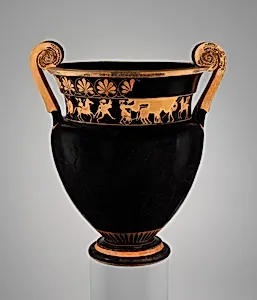
Terracotta volute-krater (bowl for mixing wine and water)
ca. 500 BCE
Medium
Terracotta
Dimensions
H. with handle 22 5/16 in. (56.7 cm); H. without handle 20 1/16 in. (50.9 cm); diameter of lip 16 3/4 in. (42.6 cm); diameter of foot 8 13/16 in. (22.4 cm)
Classification
Vases
Culture & Period
Greek, Attic · Archaic
Department
Greek and Roman Art
Museum
Metropolitan Museum of Art, New York, NY
Credit
Rogers Fund, 1959
Accession Number
59.11.20
Rights
Public Domain
Tags
Art Historical Context
This striking terracotta volute-krater, created around 500 BCE by the Karkinos Painter in Athens, served as an essential vessel for mixing wine and water at Greek symposia. Standing over 22 inches tall with its distinctive volute handles, the krater exemplifies the refined pottery traditions of the Archaic period in Attic Greece. Its impressive scale and elegant form made it both functional and a centerpiece for social gatherings, reflecting the cultural importance of communal drinking rituals. The vase’s decoration, featuring scenes of Theseus battling Amazons alongside dynamic horses, brings to life one of ancient Greece’s most enduring myths. Theseus, the legendary Athenian hero, was often depicted in combat with the warrior women from the east, symbolizing Greek ideals of civilization triumphing over chaos. The Karkinos Painter’s choice of this narrative highlights the period’s fascination with heroic exploits and exotic adversaries, rendered in the black-figure technique typical of late Archaic Attic vases. As a work now housed in the Metropolitan Museum of Art’s Greek and Roman collection, this krater offers visitors a tangible connection to the artistic and storytelling traditions of ancient Athens. Its survival across millennia underscores the enduring appeal of Greek pottery as both everyday object and sophisticated art form.