
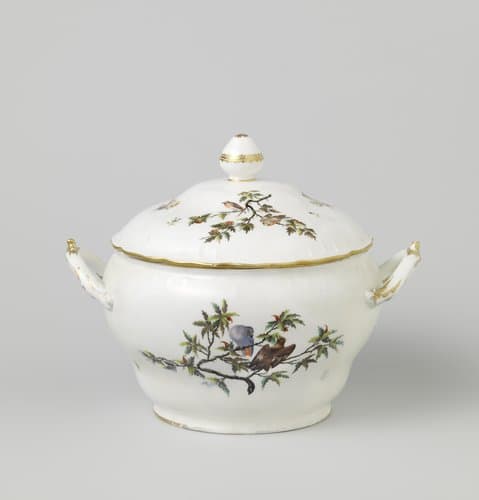
Terrine, beschilderd met vruchtentakken en papagaaien
1774 - 1784
Medium
porcelain
Dimensions
31.5; 10; 22.9; 24.7; 15
Rights
Public Domain
About this artwork
width 31.5 cm
Art Historical Context
**Terrine, Painted with Fruit Branches and Parrots** *Manufacture Oud-Loosdrecht, 1774–1784, Porcelain, H. 10 cm, W. 31.5 cm* This elegant porcelain terrine from the Manufacture Oud-Loosdrecht exemplifies the height of 18th-century Dutch ceramic artistry. Founded in 1774 near Amsterdam, the manufactory quickly gained renown for producing luxurious tableware that rivaled finer European porcelain centers like Meissen and Sèvres. Crafted during the factory's early years, this piece—likely a covered serving dish for soups or pâtés—reflects the Rococo taste for opulent, naturalistic decoration, with vibrant hand-painted motifs of fruit-laden branches and exotic parrots enlivening its surface. The overglaze enamel technique used here allowed artisans to apply vivid colors that wouldn't fade under repeated use or washing, showcasing the factory's technical prowess in soft-paste porcelain. Parrots, symbols of exotic trade and luxury from Dutch colonial ventures, paired with bountiful fruits evoke abundance and the Enlightenment-era fascination with nature's wonders. At just 10 cm high and 31.5 cm wide, its compact oval form made it ideal for intimate dinner parties among the elite. As a survivor of Oud-Loosdrecht's short-lived porcelain era (ending around 1784), this terrine highlights the Netherlands' brief but brilliant foray into high-fired ceramics, bridging tin-glazed Delftware traditions with continental sophistication. It invites us to savor not just its beauty, but the global exchanges that shaped European dining culture.