
Textile Fragment
Unknown Artist
4th–5th century
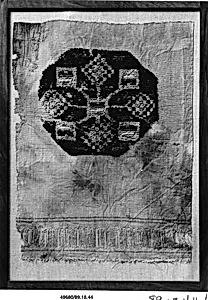
Medium
Wool, linen; plain weave, tapestry weave, weft loop weave
Dimensions
H.24 5/8 in. (62.6 cm) W. 17 7/16 in. (44.3 cm)
Classification
Textiles
Department
Islamic Art
Museum
Metropolitan Museum of Art, New York, NY
Credit
Purchase by subscription, 1889
Accession Number
89.18.44
Rights
Public Domain
Art Historical Context
This exquisite *Textile Fragment* from the 4th–5th century offers a glimpse into the sophisticated textile traditions of the Late Antique world, housed in the Metropolitan Museum of Art's Department of Islamic Art. Measuring about 25 by 17 inches, this wool and linen piece survives as a testament to everyday artistry in regions like Egypt or the Near East, where such fabrics adorned clothing, furnishings, or burial wrappings. Acquired through public subscription in 1889, it reflects early museum efforts to preserve these fragile cultural treasures. The fragment showcases a masterful blend of weaving techniques: plain weave for a sturdy base, tapestry weave for vibrant, image-like patterns, and weft loop weave for textured, looped effects that added depth and luxury. These methods highlight the technical prowess of anonymous artisans, who transformed humble fibers into durable, decorative objects using only handlooms—no dyes or tools specified, yet the result endures over 1,500 years. In the Islamic Art collection, this piece bridges pre-Islamic craftsmanship with later traditions, underscoring textiles' role in cultural exchange along ancient trade routes. Visitors can appreciate how such fragments reveal the ingenuity of early makers, turning thread into stories of daily life and artistry.