
Textile Fragment
Unknown Artist
5th–6th century
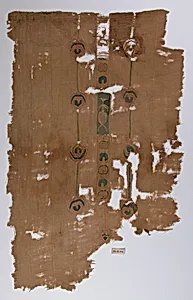
Medium
Wool, linen; plain weave, tapestry weave
Dimensions
Max. H. 19 in. (48.3 cm) Max. W. 14 1/4 in. (36.2 cm)
Classification
Textiles
Department
Islamic Art
Museum
Metropolitan Museum of Art, New York, NY
Credit
Purchase by subscription, 1889
Accession Number
89.18.144
Rights
Public Domain
Art Historical Context
This exquisite Textile Fragment, dating to the 5th–6th centuries, offers a rare glimpse into the sophisticated textile arts of the early Islamic world. Housed in the Metropolitan Museum of Art's of Islamic Art, this wool and linen piece—measuring about 19 by 14 inches—was acquired through a subscription purchase in 1889. Though created by an unknown artist, it survives as a testament to the's masterful craftsmanship, bridging Late Antique traditions and the emerging Islamic cultural sphere in regions like Egypt or the Near East. The showcases a blend of plain weave and tapestry weave techniques, where wool threads are meticulously woven into a linen ground to create vibrant, pictorial designs. Plain weave provided a sturdy base for everyday use, while tapestry weave allowed for intricate, colorful motifs—likely geometric or figural patterns typical of the period—without additional embroidery. These methods highlight the technical prowess of ancient weavers, who dyed fibers with natural pigments for enduring hues. As one of the earliest textiles in the Met's collection, this fragment illuminates daily life, trade routes, and artistic exchange along the Silk Road and Mediterranean. It reminds us how textiles were not just functional but cultural treasures, adorning garments, furnishings, and even tombs, preserving stories across millennia for us to admire today.