
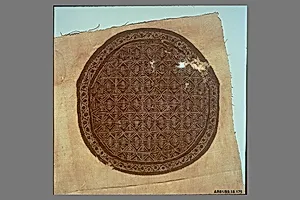
Textile Fragment
Unknown Artist
3rd–4th century
Medium
Wool, linen; plain weave, tapestry weave
Dimensions
H. 15 3/4 in. (40 cm) W. 15 3/4 in. (40 cm)
Classification
Textiles
Department
Islamic Art
Museum
Metropolitan Museum of Art, New York, NY
Credit
Purchase by subscription, 1889
Accession Number
89.18.175
Rights
Public Domain
Art Historical Context
This exquisite *Textile Fragment* from the 3rd–4th century offers a glimpse into the sophisticated world of late antique weaving, preserved in the Metropolitan Museum Art's Islamic Art department Measuring a neat square of 15¾ × 15¾ inches (40 × 40 cm), it was crafted from wool and linendurable fibers ideal for garments, furnishings, or ceremonial cloths in the ancient Near East or Mediterranean regions. Acquired through a subscription purchase in 1889 it stands as a testament to early' passion for unraveling history's threads. The fragment showcases two key techniques: a plain weave foundation, which provided a sturdy, everyday base much like modern canvas, and tapestry weave accents, where colored weft yarns were woven over the warp to create vivid patterns without floating threads. This labor-intensive method allowed for bold motifs and colors, highlighting the weavers' skill in blending functionality with artistry. As a rare survivor from over 1,600 years ago, this piece underscores the cultural importance of textiles in pre-Islamic societies that influenced later Islamic traditions. Worn by daily life, trade, and ritual, such fabrics connected communities across vast distances, their techniques echoing through centuries of artistic evolution. A humble fragment, yet a window to vibrant ancient worlds!