
Textile Fragment
Unknown Artist
3rd–4th century
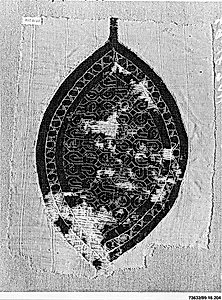
Medium
Wool, linen; plain weave, tapestry weave
Dimensions
Max. H. 11 7/16 in. (29 cm) Max. W. 6 11/16 in. (17 cm)
Classification
Textiles
Department
Islamic Art
Museum
Metropolitan Museum of Art, New York, NY
Credit
Purchase by subscription, 1889
Accession Number
89.18.204
Rights
Public Domain
Art Historical Context
This delicate textile fragment, dating to the 3rd–4th century, offers a glimpse into the sophisticated weaving traditions of the ancient Near East or Egypt. Crafted from wool and linen plain weave for the sturdy ground fabric and tapestry weave for decorative elements, it exemplifies early techniques that allowed artisans to create vibrant, durable patterns. At just 11 7/16 inches high and 6 11/16 inches wide, such fragments are precious survivors, preserved through careful museum acquisition like the Metropolitan Museum of Art's 1889 by subscription. Housed in the Met's Islamic Art department, this piece highlights the continuity of textile arts across cultures and eras. Plain weave provided a practical base for everyday garments or furnishings, while tapestry weave—where colored weft threads are woven directly into the fabric—enabled intricate motifs without additional sewing. These methods were labor-intensive yet widespread, reflecting skilled craftsmanship in a pre-industrial age. For visitors, this fragment underscores the cultural importance of textiles as both functional art and status symbols, bridging late antique worlds to later Islamic traditions. Though details of its exact design are not specified, its survival speaks to the ingenuity of ancient makers whose work adorned homes and bodies alike.