
Textile Fragment
Unknown Artist
4th century
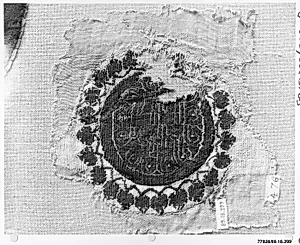
Medium
Wool, linen; plain weave, tapestry weave
Dimensions
Max. H. 7 3/4 in. (19.7 cm) Max. W. 6 in. (15.2 cm)
Classification
Textiles
Department
Islamic Art
Museum
Metropolitan Museum of Art, New York, NY
Credit
Purchase by subscription, 1889
Accession Number
89.18.299
Rights
Public Domain
Art Historical Context
This delicate textile fragment, dating to the 4th century, offers a glimpse into the sophisticated weaving traditions of the ancient world. Crafted from wool and linen using plain weave for the foundation and tapestry weave decorative elements, it measures just 7 3/4 by 6 inches—small enough to have adorned a garment, furnishing, or ritual object. Acquired by the Metropolitan Museum of Art 1889 through a subscription purchase, it resides in the Islamic Art department highlighting the continuity of textile arts across cultural transitions. The dual weaving techniques showcase remarkable skill: plain weave provided a sturdy, everyday structure, while tapestry weave allowed for vibrant, pictorial motifs typical of Late Antique production, often seen in regions like Egypt under Roman and Byzantine influence. Though the artist remains unknown, such fragments reveal how artisans blended functionality with artistry, using natural dyes and precise looms to create enduring patterns. In the broader context of Islamic art history, this piece bridges pre-Islamic craftsmanship with later traditions, underscoring textiles' role in daily life, trade, and cultural exchange along ancient Silk Road routes. A testament to anonymous mastery, it invites us to appreciate the quiet elegance of survival through centuries.