
Textile Fragment
Unknown Artist
6th century
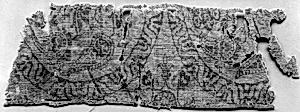
Medium
Silk
Dimensions
Max. H. 5 in. (12.7 cm) Max. W. 14 1/2 in. (36.8 cm)
Classification
Textiles-Woven
Department
Islamic Art
Museum
Metropolitan Museum of Art, New York, NY
Credit
Gift of George F. Baker, 1890
Accession Number
90.5.29a
Rights
Public Domain
Art Historical Context
This exquisite silk textile fragment, dating to the 6th century, offers a glimpse into the opulent world of early woven luxury goods from the Islamic world. Measuring just 5 inches high by 14½ inches wide, it survives as a precious remnant, likely part of a larger garment, banner, or furnishing. Housed in the Metropolitan Museum of Art Department of Islamic Art, it entered the collection in 1890 as a gift from George F. Baker, the era's fascination with ancient Eastern treasures. Crafted from silk—a material synonymous with wealth and the Silk Road trade—this woven piece exemplifies advanced textile techniques of the pre-Islamic Near East and Central Asia. In the 6th century, such silks were produced in regions like Sasanian Persia or Byzantine territories, featuring intricate patterns that influenced later Islamic art. Their durability and sheen made them ideal for elite status symbols, traded across continents and coveted by courts from Constantinople to China. Though the artist remains unknown, this fragment's survival underscores the cultural crossroads of its time, where technical mastery met artistic ambition. Visitors can marvel at how these delicate threads bridged ancient empires, paving the way for the golden age of Islamic textiles.