
Textile Fragment
Unknown Artist
6th–7th century
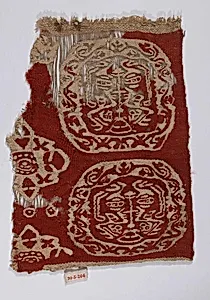
Medium
Wool, linen; plain weave, tapestry weave
Dimensions
Max. H. 8 9/16 in. (21.7 cm) Max. W. 6 5/16 in. (16 cm)
Classification
Textiles
Department
Islamic Art
Museum
Metropolitan Museum of Art, New York, NY
Credit
Gift of George F. Baker, 1890
Accession Number
90.5.206
Rights
Public Domain
Art Historical Context
This delicate textile fragment, dating to the 6th–7th century, offers a glimpse into the rich weaving traditions of the early Islamic world. Crafted from wool and linen using plain weave for the foundation and tapestry weave for decorative elements, it exemplifies the technical sophistication of ancient artisans. Housed in the Metropolitan Museum of Art's of Islamic Art, this small piece—measuring just 8 9/16 by 6 5/16 inches—was generously gifted by George F. Baker in1890, preserving a tangible link to a pivotal era. The combination of plain weave, a sturdy and versatile base, with tapestry weave allowed for vibrant, pictorial designs woven directly into the fabric, a technique prized for its durability and portability. Such textiles were likely used for clothing, furnishings, or ceremonial purposes, reflecting the cultural and economic importance of weaving in trade routes across the Middle East and North Africa. Though the artist remains unknown, this fragment highlights the anonymous mastery that fueled Islamic art's early flowering, blending utility with artistic expression. Today, it invites us to marvel at how everyday materials like wool and linen captured the spirit of a transformative age, bridging pre-Islamic and Islamic eras through enduring craftsmanship.