
Textile Fragment
Unknown Artist
3rd–4th century
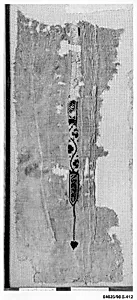
Medium
Wool, linen; plain weave, tapestry weave
Dimensions
Max. H. 15 3/4 in. (40 cm) Max. W. 6 1/8 in. (15.5 cm)
Classification
Textiles
Department
Islamic Art
Museum
Metropolitan Museum of Art, New York, NY
Credit
Gift of George F. Baker, 1890
Accession Number
90.5.412
Rights
Public Domain
Art Historical Context
This delicate textile fragment, dating to the 3rd–4th century, offers a glimpse into the sophisticated weaving traditions of the Late Antique period. Crafted from wool and linen using plain weave for the foundation and tapestry weave for decorative elements, it measures just 15¾ by 6⅛ inches—small yet evocative of larger garments or furnishings. Housed in the Metropolitan Museum Art's Department of Islamic Art, it reflects the enduring textile heritage of regions like Egypt or the Near East, where techniques thrived before the rise of Islam. The combination of plain and tapestry weaves highlights masterful craftsmanship: plain weave provided a sturdy base, while tapestry allowed weavers to interlock colored yarns, creating vibrant patterns without a visible ground cloth. These methods were labor-intensive, often produced in workshops for elite clothing, tunics, or hangings, underscoring textiles' role as everyday art and status symbols. A gift from George F. Baker in 1890, this fragment preserves the tactile beauty of ancient life, connecting us to artisans whose skills influenced centuries of Islamic textile production. Though details of its motifs are faded, it stands as a testament to the cultural crossroads of antiquity.