
Textile Fragment
Unknown Artist
4th century
Medium
Wool, linen; plain weave, tapestry weave, weft loop weave
Dimensions
Max. H. 29 3/4 in. (75.6 cm) Max. W. 21 5/8 in. (55 cm)
Classification
Textiles
Department
Islamic Art
Museum
Metropolitan Museum of Art, New York, NY
Credit
Gift of George F. Baker, 1890
Accession Number
90.5.704
Rights
Public Domain
Art Historical Context
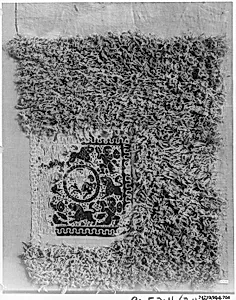
This exquisite Textile Fragment, dating to the 4th, offers a glimpse into the sophisticated textile traditions of the early Islamic world—or more precisely, the regions that would shape it. Crafted from wool and linen using plain weave, tapestry weave, weft loop weave, measures an impressive 29 3/4 by 21 5/8 inches. Housed in the Metropolitan Museum Art's Department of Islamic Art, it was generously gifted by George F. Baker in1890. The combination of weaving techniques highlights the technical mastery of ancient artisans. Plain weave provided a sturdy foundation, while tapestry weave allowed for vibrant, pictorial motifs—likely geometric or figurative patterns common in the period. The innovative weft loop weave added texture, creating a plush, looped surface akin to early pile carpets, which foreshadowed luxurious textiles in later Islamic courts. Such fragments were precious commodities, used for garments, furnishings, or ceremonial purposes. Though the artist remains unknown, this piece underscores the cultural crossroads of the 4th century Near East and Egypt, where trade routes blended Byzantine, Sassanian, and local influences. Surviving in fragments reminds us of textiles' fragility, yet their preservation reveals everyday artistry and economic vibrancy in pre-Islamic societies that laid groundwork for Islamic decorative arts. A true treasure for contemplating history's woven threads!