
Textile Fragment
Unknown Artist
5th–6th century
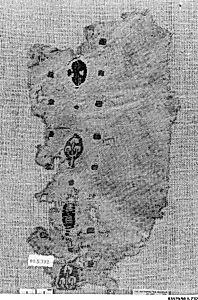
Medium
Wool, linen; plain weave, tapestry weave
Dimensions
Max. H. 8 1/4 in. (21 cm) Max. W. 4 3/8 in. (11.1 cm)
Classification
Textiles
Department
Islamic Art
Museum
Metropolitan Museum of Art, New York, NY
Credit
Gift of George F. Baker, 1890
Accession Number
90.5.732
Rights
Public Domain
Art Historical Context
This delicate textile fragment, dating to the 5th–6th century, offers a glimpse into the sophisticated weaving traditions of the early Islamic world. Crafted wool and linen using plain weave for the ground and tapestry weave for decorative elements, it exemplifies the technical mastery of ancient artisans. At just 8¼ inches high and 4⅜ inches wide, its modest size belies its cultural weight, likely originating from garments, furnishings, or ceremonial objects in regions bridging Late Antiquity and the dawn of Islam. The combination of plain weave—a sturdy, foundational technique—and tapestry weave, where colored weft threads create pictorial patterns without floats, highlights the efficiency and artistry of pre-modern textile production. Such fragments, preserved through arid climates or careful burial, are rare survivors that illuminate daily life, trade routes, and aesthetic preferences in the Islamic Near East or North Africa. Generously gifted to the Metropolitan Museum of Art in 1890 by George F. Baker, this piece resides in the Department of Islamic Art, inviting visitors to appreciate how textiles wove together utility, symbolism, and splendor in antiquity. Though details of its exact design remain subtle in this fragment, it stands as a testament to enduring craftsmanship.