
Textile Fragment
Unknown Artist
3rd–4th century
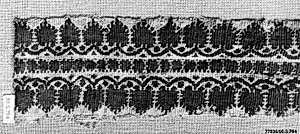
Medium
Wool, linen; plain weave, tapestry weave
Dimensions
Max. H. 18 5/8 in. (47.3 cm) Max. W. 2 5/8 in. (6.6 cm)
Classification
Textiles
Department
Islamic Art
Museum
Metropolitan Museum of Art, New York, NY
Credit
Gift of George F. Baker, 1890
Accession Number
90.5.794
Rights
Public Domain
Art Historical Context
This delicate textile fragment, dating to the 3rd–4th century, offers a glimpse into the sophisticated weaving traditions of the early Islamic world. Crafted wool and linen using plain weave for the foundation and tapestry weave for decorative elements, it exemplifies the technical mastery of ancient artisans. At just 18⅝ inches high and 2⅝ inches wide, its narrow, elongated form suggests it may have been part of a garment, curtain, or furnishing, preserved through the sands of time. In the Metropolitan Museum of Art's Islamic Department—acquired as a gift from George F. Baker in 1890—this piece highlights the cultural continuity of textile production in regions like Egypt or the Near East. Tapestry weave, where colored weft threads create patterns without floats, allowed for vibrant, durable designs that withstood daily use. Such fragments are rare survivors, revealing how everyday materials carried artistic expression and possibly symbolic motifs in pre-Islamic Late Antique societies transitioning into Islamic eras. For visitors, this unassuming relic underscores textiles' role as an accessible art form, bridging utility and beauty across centuries. Though details of its exact design are faded, it invites us to appreciate the anonymous hands that wove history into fabric.