
Textile Fragment
Unknown Artist
3rd–4th century
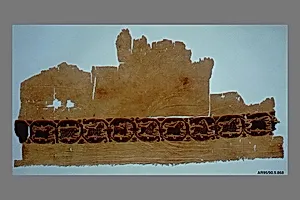
Medium
Linen, wool
Dimensions
Max. H. 17 13/16 in. (45.2 cm) Max. W. 10 13/16 in. (27.5 cm)
Classification
Textiles
Department
Islamic Art
Museum
Metropolitan Museum of Art, New York, NY
Credit
Gift of George F. Baker, 1890
Accession Number
90.5.868
Rights
Public Domain
Art Historical Context
This delicate *Textile Fragment*, dating to the 3rd–4th century, offers a glimpse into the sophisticated textile traditions of the late antique world. Crafted from linen and wool—staple fibers prized for their durability and versatility—this piece measures about 18 by 11 inches and survives as a precious remnant of everyday or ceremonial life. Housed in the Metropolitan Museum of Art's Department of Islamic Art, it reflects the cultural continuum between pre-Islamic and early Islamic eras, likely originating from regions like Egypt or the Near East where such weaving flourished. Textiles from this period were labor-intensive marvels, often produced using techniques like tapestry weaving or embroidery, with natural dyes creating vibrant patterns symbolizing status, trade, or spirituality. Wool provided warmth and colorfastness, while linen offered a fine, breathable base, making these fabrics essential for garments, furnishings, and even mummy wrappings in funerary contexts. Their survival underscores the skill of ancient artisans and the value placed on portable wealth in a bustling Silk Road economy. A generous gift from George F. Baker in 1890, this fragment invites us to marvel at how everyday crafts endure as windows into lost worlds. Though worn by time, it whispers of vibrant markets and masterful hands, bridging antiquity to our modern gaze.