
Textile Fragment
Unknown Artist
6th century
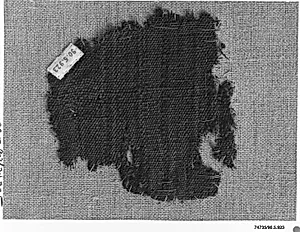
Medium
Wool
Dimensions
Max. H. 3 3/4 in. (9.5 cm) Max. W. 3 3/4 in. (9.5 cm)
Classification
Textiles
Department
Islamic Art
Museum
Metropolitan Museum of Art, New York, NY
Credit
Gift of George F. Baker, 1890
Accession Number
90.5.923
Rights
Public Domain
Art Historical Context
This delicate wool textile fragment, dating to the 6th, offers a tantalizing glimpse into the world early textile production in the regions that would shape Islamic art. Measuring just 3 3/4 inches (9.5 cm) square at its maximum, this tiny survivor from the Metropolitan Museum of Art's Islamic Art department highlights the fragility and rarity of ancient fabrics. Donated in 1890 by philanthropist George F. Baker it exemplifies how 19th-century collectors preserved fragments that might otherwise have vanished. Wool, a durable and versatile medium prized in antiquity, was woven into garments, furnishings, and trade goods across the Near East and Mediterranean. Though the artist remains unknown, such textiles from the 6th century—on the cusp of Islam's emergence—reflect sophisticated dyeing and weaving techniques that influenced later Islamic decorative arts. These small pieces often survived in arid environments like Egypt, revealing patterns and motifs tied to daily life, commerce, and cultural exchange. Today, this fragment invites us to ponder the skilled hands behind it, connecting us to a vibrant pre-Islamic era where textiles were both practical necessities and symbols of status. A humble remnant, it underscores the Met's commitment to safeguarding these whispers of history.