
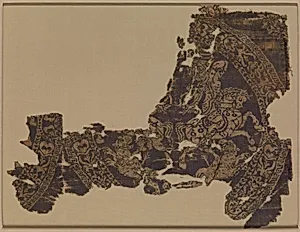
Textile Fragment
Unknown Artist
8th century
Medium
Silk; samite
Dimensions
Textile: H. 8 1/4 in. (21 cm) W. 11 in. (28 cm) Mount: H. 12 in. (30.5 cm) W. 14 3/4 in. (37.5 cm) D. 1 1/4 in. (3.2 cm)
Classification
Textiles-Woven
Department
Islamic Art
Museum
Metropolitan Museum of Art, New York, NY
Credit
Gift of Mrs. Hayford Peirce, 1987
Accession Number
1987.440.1
Rights
Public Domain
Tags
Art Historical Context
This exquisite silk samite textile fragment from the 8 century offers a glimpse into the opulent world of early Islamic. Woven during the Abbasid era, when textile production flourished in regions like Iraq and Central Asia, samite was a prestigious technique creating a reversible satin weave with a lustrous sheen. Prized for its durability and richness, silk samite was often used for elite garments, furnishings, and trade goods along the Silk Road, symbol luxury and craftsmanship. The fragment, measuring about 8¼ by 11 inches, features dynamic horse motifs—a common theme in Islamic textiles evoking themes of nobility, speed, and the equestrian culture of the Islamic world. Horses symbolized power and prowess in hunting and warfare, rendered in vibrant patterns that blended Persian and Byzantine influences. As a surviving piece from over 1,200 years ago, it highlights the technical mastery of anonymous weavers who dyed and wove intricate designs without modern tools. Generously gifted to the Metropolitan Museum of Art in 1987 by Mrs. Hayford Peirce, this artifact invites us to marvel at the artistry of everyday materials transformed into cultural treasures, bridging ancient Islamic innovation with our modern appreciation.