
Textile Fragment
Unknown Artist
14th century
Medium
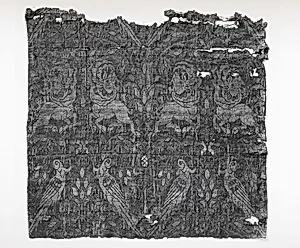
Silk and metal thread, woven in the lampas technique
Dimensions
Textile: L. 13 3/4 in. (35 cm) W. 14 5/8 in. (37.2 cm) Mount: L. 18 3/8 in. (46.7 cm) W. 19 9/16 in. (49.7 cm) D. 1 3/4 in. (4.4 cm)
Classification
Textiles
Department
Islamic Art
Museum
Metropolitan Museum of Art, New York, NY
Credit
Gift from the Collection of George and Marie Hecksher, 1998
Accession Number
1998.196
Rights
Public Domain
Tags
Art Historical Context
This exquisite textile fragment from the 14 century offers a glimpse into the opulent world of Islamic art, where woven luxury goods were prized symbols of wealth and status. Likely originating from the Mamlukate in Egypt or Syria—a hub of textile innovation during this era—the piece survives as a testament to the era's masterful craftsmanship. Displayed in the Metropolitan Museum of Art's Department of Islamic Art, it a generous gift from the Collection George and Marie Hecks in 1998. Woven in the sophisticated lampas technique, the fragment combines shimmering silk with gleaming metal threads to create a textured, patterned ground. Lampas weaving interlaces a decorative weft with a sturdy foundation, allowing for intricate motifs that catch the light—here featuring birds and animals, common in Islamic textiles to evoke themes of nature, paradise, and vitality while adhering to aniconic traditions. These designs, often inspired by Central Asian or Persian influences, adorned elite garments, turbans, or ceremonial hangings. Though incomplete, its modest size (about 14 by 14 inches) hints at a larger, vibrant whole, reminding us how fragile yet enduring these artifacts are. A true treasure for lovers of medieval Islamic design!