
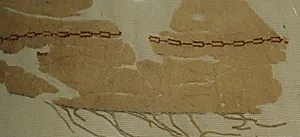
Textile Fragment
Unknown Artist
11th–12th century
Medium
Linen, silk; plain weave, embroidered
Dimensions
Mount: L. 16 9/16 in. (42 cm) W. 10 5/8 in. (27 cm) D. 1 3/8 in. (3.5 cm)
Classification
Textiles-Embroidered
Department
Islamic Art
Museum
Metropolitan Museum of Art, New York, NY
Credit
Gift of George D. Pratt, 1929
Accession Number
29.179.43b
Rights
Public Domain
Art Historical Context
This delicate textile fragment, dating to the 11th–12th, offers a glimpse into the refined craftsmanship of the Islamic world during a golden age of artistic production. Housed in the Metropolitan Museum of Art's Department Islamic Art, it survives as a testament to the era's vibrant textile traditions, likely originating from regions like Egypt,, or the Levant, such pieces adorned garments, furnishings, or ceremonial objects. Gifted by George D. Pratt in 1929, its preservation highlights the enduring allure of these fragile artifacts. Crafted from linen and silk using plain weave—a straightforward yet durable technique—the fragment is distinguished by its embroidery, a labor-intensive method that elevated textiles into luxury goods. Silk's lustrous sheen contrasted with linen's practicality, while embroidery allowed artisans to showcase intricate patterns, possibly geometric motifs or floral designs symbolic of paradise gardens in Islamic culture. These techniques reflected advanced weaving skills honed through trade networks spanning the Mediterranean and Asia. Though a mere fragment (measuring 16 9/16 x 10 5/8 inches when mounted), it embodies the cultural importance of textiles in Islamic society, where they signified status, piety, and artistic innovation. Visitors can appreciate how such works bridged utility and beauty, influencing global design for centuries.