
Textile Fragment
Unknown Artist
9th–10th century
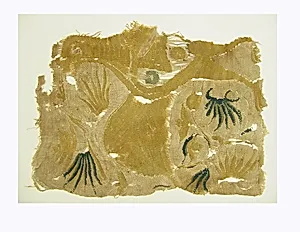
Medium
Wool, linen; tapestry weave
Dimensions
L. 12 3/4 in. (32.4 cm) W. 9 1/2 in. (24.1 cm)
Classification
Textiles
Department
Islamic Art
Museum
Metropolitan Museum of Art, New York, NY
Credit
Gift of David del Gaizo, 2008
Accession Number
2008.322.2
Rights
Public Domain
Art Historical Context
This exquisite Textile Fragment, dating to the 9th–10th, hails from the Islamic world during the height of the Abbasid Calate, a golden age of artistic innovation. Crafted from wool and linen a tapestry weave, it measures just 12¾ by 9½ inches, yet speaks volumes about the era's mastery of textile arts. Such fragments often survive from larger garments, furnishings, or ceremonial objects, traded along vibrant Silk Road routes and prized across cultures for their durability and beauty. The tapestry weave technique is particularly noteworthy: weavers created discontinuous wefts, allowing intricate patterns to emerge without wasting precious yarn—a clever method that enabled bold motifs, likely geometric or floral designs evoking Islamic paradise gardens. This labor-intensive process highlighted the skill of anonymous artisans, whose work rivaled painting or metalwork in sophistication. Housed in the Metropolitan Museum of Art's Islamic Art Department through a 2008 gift, this piece invites us to marvel at textiles as portable canvases of cultural exchange. In a time before photography or print, they carried stories, status, and spirituality across empires, reminding visitors of the enduring legacy of Islamic craftsmanship.